
Inspiration and hope in the sound of spring
Science tells us why songbirds charm us. Do they provide some lessons, too?

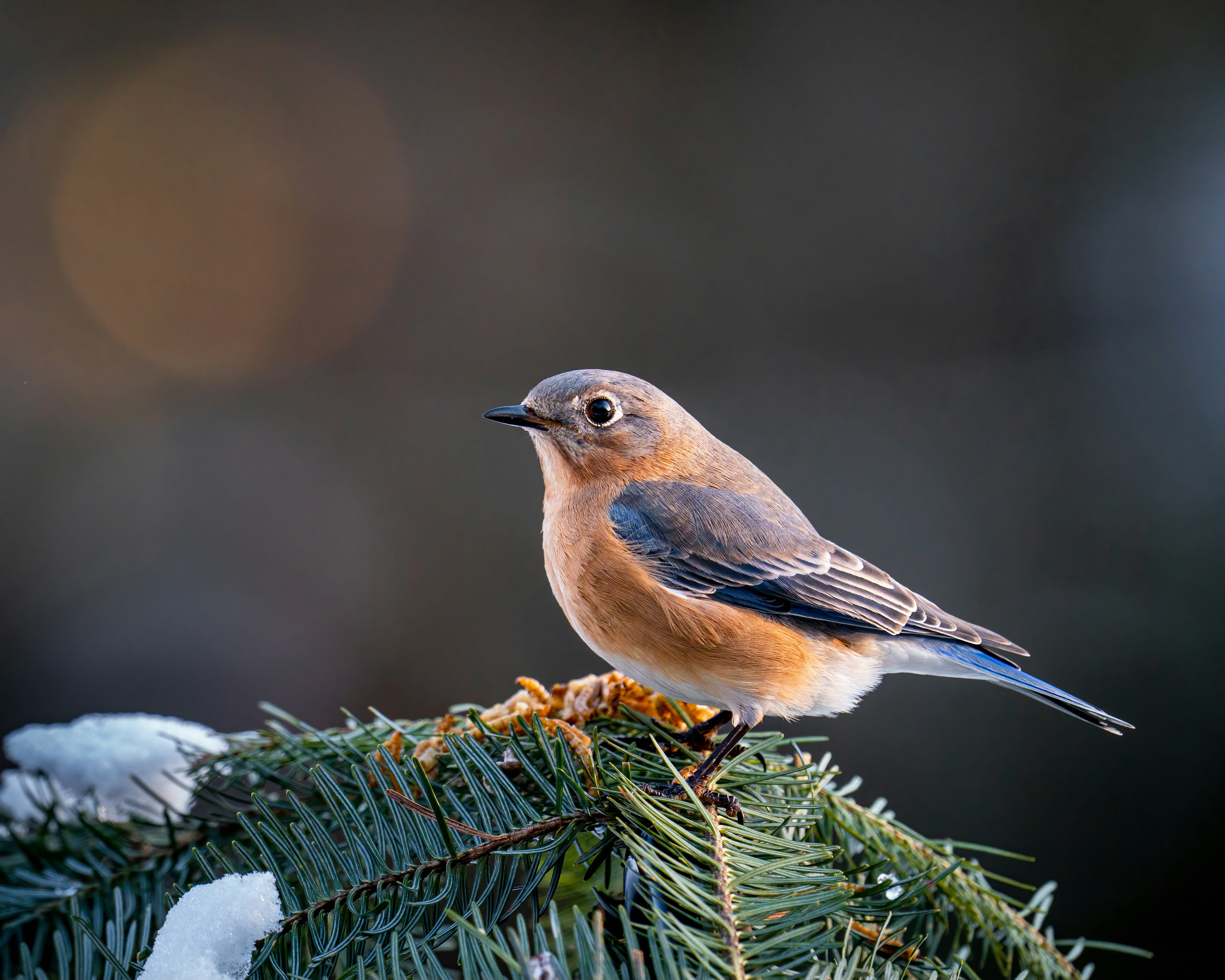
We take joy from birdsong in spring. Maybe we should take their example, as well. (Photo by Skyler Ewing on Unsplash)
One morning last week I noticed that the still silence of winter had broken. As my pup Roscoe and I skirted the edge of the woods near our place, there was a cacophony of birdsong in the air. It has been a cold and snowy winter Upstate — like those we used to have before climate change made old-fashioned winter rare — but the dawn chorus on that particular day was clearly signaling the nearing of a new season.
Some birds let us hear them even in wintertime, but mostly it’s a season without music in the air. That’s partly because a lot of birdsong is aimed at defending nesting territories and attracting mates, and since most birds don’t breed in winter, the biological urge to sing fades. Plus, ornithologists explain that singing is physically demanding on a bird — it can consume roughly 50 percent more energy than resting — and so birds mostly lay aside music-making in the cold to avoid competing with their urgent need to find food and stay warm. When we hear them now, it means the singers have made it through a tough time.
Science also offers a sense of why we humans are so grateful for the return of the airborne music. Research suggests that birdsong actually can reduce our anxiety. It’s probably an evolutionary trait, since our forebears figured out that birds typically hush when predators are near. Silence thus signals danger, and song is the all-clear. We hear it as a primal signal of resilience. God knows we’re grateful these days for anything that might both lessen stress and inspire us to tenacity.
On that particular morning, the cheery sounds coming from the woods were especially welcome. I tend to check morning headlines before Roscoe and I head out — a habit from decades in journalism that puts me at risk of pre-breakfast glumness. And just a few hours before our walk, the President of the United States had announced on his social media platform that he had plunged the nation into war in the Mideast.
It was a stealth announcement: Donald Trump, wearing a white baseball cap, delivering an eight-minute monologue into a camera. Of course, if he had ever displayed the integrity to deserve the benefit of the doubt, we might conclude that he made a dark-of-the-night announcement on a niche platform he owns because it was simply the quickest way to alert citizens to the surprise attack he ordered on their behalf. Instead it seemed downright cowardly, the political equivalent of an unfaithful paramour slipping an envelope beneath the door before fleeing.
The move to make war had the hallmarks of other Trump decisions that have been driven mainly by his gut rather than any higher organ — heart or mind, say. And while most presidents line up allies to support their wars of choice, Trump’s announcement was as much a shock to other nations as it was to his own. It was a failure of competent governance: Building coalitions, at home and abroad, is hard work, after all. And maybe that’s part of why the attack isn’t popular: A week into the conflict, polls show only about 36 percent of Americans back Trump’s handling of relations with Iran.
Nor is the outlook for this conflict positive. Leaders usually draw the greatest support for their military ventures at their outset. When George W. Bush announced his “shock and awe” attack on Iraq in early 2003, only 27 percent of Americans opposed the action. It’s typically only when the impact of war is felt at home — in higher prices, perhaps, or a shortage of imported goods, not to mention the return of flag-draped coffins — that the reality of war engenders strong opposition. By the time Barack Obama finally pulled the last U.S. troops out of Iraq in 2011, 75 percent of Americans supported the decision to withdraw.
So we are facing the prospect of a more disillusioned electorate at a time when already less than 4 in 10 Americans approve of Trump’s job performance. They’re especially unhappy about his handling of inflation and prices, taxes and spending, and jobs and the economy, but also foreign policy and, notably, immigration — the issue that propelled him to victory in 2024.
No wonder we are unsettled. Consider what has happened in the first 14 months of this presidential term.
Trump provoked an affordability crisis by imposing tariffs — unconstitutionally, according to the Supreme Court — that increased costs for working families and businesses.
He pushed through tax cuts mostly benefiting the wealthy, while joblessness has grown for ordinary working people.
He sent masked agents into the streets of cities in the guise of a crackdown on criminal immigrants; three American citizens were killed by those troops, and countless people were wrongfully imprisoned.
He attacked healthcare standards, science and higher education — part of a cynical strategy of dividing Americans to advance and take advantage of segments of the population that tend to support his Republican party.
He weaponized the federal government to protect his allies and torment political opponents, undermined election integrity by trying to purge voter rolls and “nationalize” elections and distorted public information by demanding allegiance as a price of allowing media companies to operate without official harassment.
He used the presidential pardon power on behalf of political supporters and corruptly enriched himself and his allies with lax regulation and the solicitation of gifts from foreign governments.
He decimated environmental protection and the fight to mitigate climate change, ransacked competence from the federal workforce, pushed healthcare out of reach of millions of Americans and set the stage for millions of deaths worldwide by decimating foreign aid programs.
This bill of particulars of Donald Trump’s offenses is incomplete, but even as it stands, thoughtful Americans ought to consider and remember it — and not, please, let it be shoved aside as too depressing, perhaps. That’s because we must power forward change this year, and to do that we need to use righteous anger at what Trump is doing as our fuel.
This ought to be a year of celebration in America — the 250th anniversary of our founding as an independent nation, an election year when the stability of our democracy could be showcased. But under this president, the hopes of our founders have run smack into the reality of our democratic decay. Those hopes can be rekindled only if the election soundly repudiates the abusive behavior of this president and his enablers.
Many people were so disheartened by the success of Trump’s third run for the presidency that they turned away from public engagement after November of 2024. It’s understandable: We have only so much energy and attention, and it was hard to stomach the realization that our nation had chosen to once again placed its trust in a leader so corrupt, careless and immoral.
My suggestion for anyone who feels that way starts with something simple: Just get out and take a brisk walk in the morning, as Roscoe and I do. The health benefits of even moderate walks have been clearly understood for years. But in this context, there’s another reason I suggest this: You’ll hear the birds singing.
Some researchers believe that the birdsong that returns in this season is a subtle indicator to our unconscious mind of an intact natural environment — a comforting notion, surely, when our official environment is so dysfunctional.
I’m convinced, though, we also take heart from noticing this: that even as birds start to sing when the sky isn’t yet bright and there remains a chill in the air, we, too, have the ability to persist through emotional or spiritual cold and darkness. Silence signifies danger, remember — or, in our case, extends it. Making noise takes more energy, but the reward is lovely.
Not to carry the analogy too far, but this is surely true: The birds have made it through winter, and so can we make it through ours. While the warmth of change that we seek isn’t as sure as the inevitability of spring, we’ve survived this far. The rest is ours to make.
“Hope” is the thing with feathers
By Emily Dickinson
“Hope” is the thing with feathers -
That perches in the soul -
And sings the tune without the words -
And never stops - at all -
And sweetest - in the Gale - is heard -
And sore must be the storm -
That could abash the little Bird
That kept so many warm -
I’ve heard it in the chillest land -
And on the strangest Sea -
Yet - never - in Extremity,
It asked a crumb - of me.
Notes:
Originally titled "'Hope' is the thing with feathers - (314)"
Copyright Credit: Emily Dickinson, "'Hope' is the Thing with Feathers" from The Complete Poems of Emily Dickinson, edited by Thomas H. Johnson, ed., Cambridge, Mass.: The Belknap Press of Harvard University press, Copyright © 1951, 1955, 1979, 1983 by the President and Fellows of Harvard College. Reprinted by permissions of the publishers and Trustees of Amherst College.
Source: The Poems of Emily Dickinson Edited by R. W. Franklin (Harvard University Press, 1999)
WHY NOT TELL YOUR TRUTH?
LEARN TO WRITE OP-EDS — FOR PRINT, AUDIO AND PODCASTS
If you’d like some training in writing opinion essays — for newspapers, audio or digital platforms — check out the live 90-minute class Rex co-teaches that is offered by Marion Roach Smith’s global platform for writing instruction, The Memoir Project. Click below for information on our upcoming schedule of classes.
Our next class is MONDAY, MARCH 9, at 6 p.m. Eastern.
Lots of our students have been well published — and you can be, too!
BONUS CONTENT
GET MORE FROM THE UPSTATE AMERICAN
IF YOU’D LIKE TO HEAR MORE from Rex Smith — specifically, his take on current issues in American journalism — you can download the podcast of The Media Project, the 30-minute nationally-syndicated discussion that Rex leads each week with other veteran editors. In the seven states where Northeast Public Radio is heard, the program airs at 3 p.m. Eastern each Friday and is rebroadcast at 6 p.m. Sunday. You can tune in live, too, at www.wamc.org, or download the podcast there. It has been called “a half-hour of talk about finding and telling the truth.”
ENDNOTE
THANK YOU FOR JOINING US THIS WEEK
THE UPSTATE AMERICAN is a weekly essay aimed at helping all of us who are concerned about America’s future consider how we might best respond to the challenges of the day. Thank you for joining in the conversation about our common ground, this great country. I hope you’ll be back next week.
And don’t hesitate to send your thoughts, especially with ideas that you think we all ought to be considering.
-REX SMITH
“The birds they sang
At the break of day
Start again
I heard them say
Don't dwell on what has passed away
Or what is yet to be.” - Leonard Cohen, Anthem