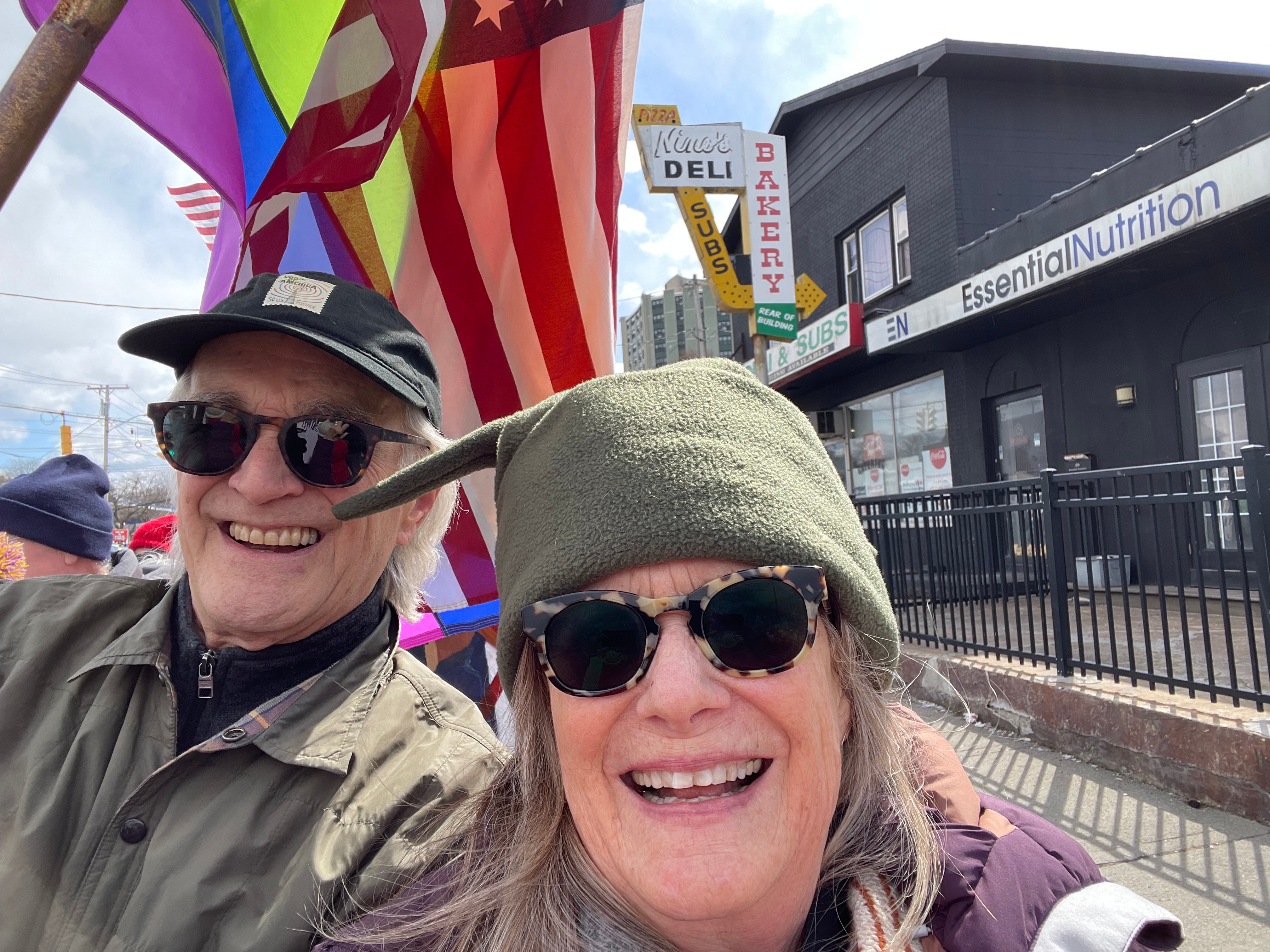
Protesting a tyrant worse than George III
No Kings Day offers Americans hope that change can come

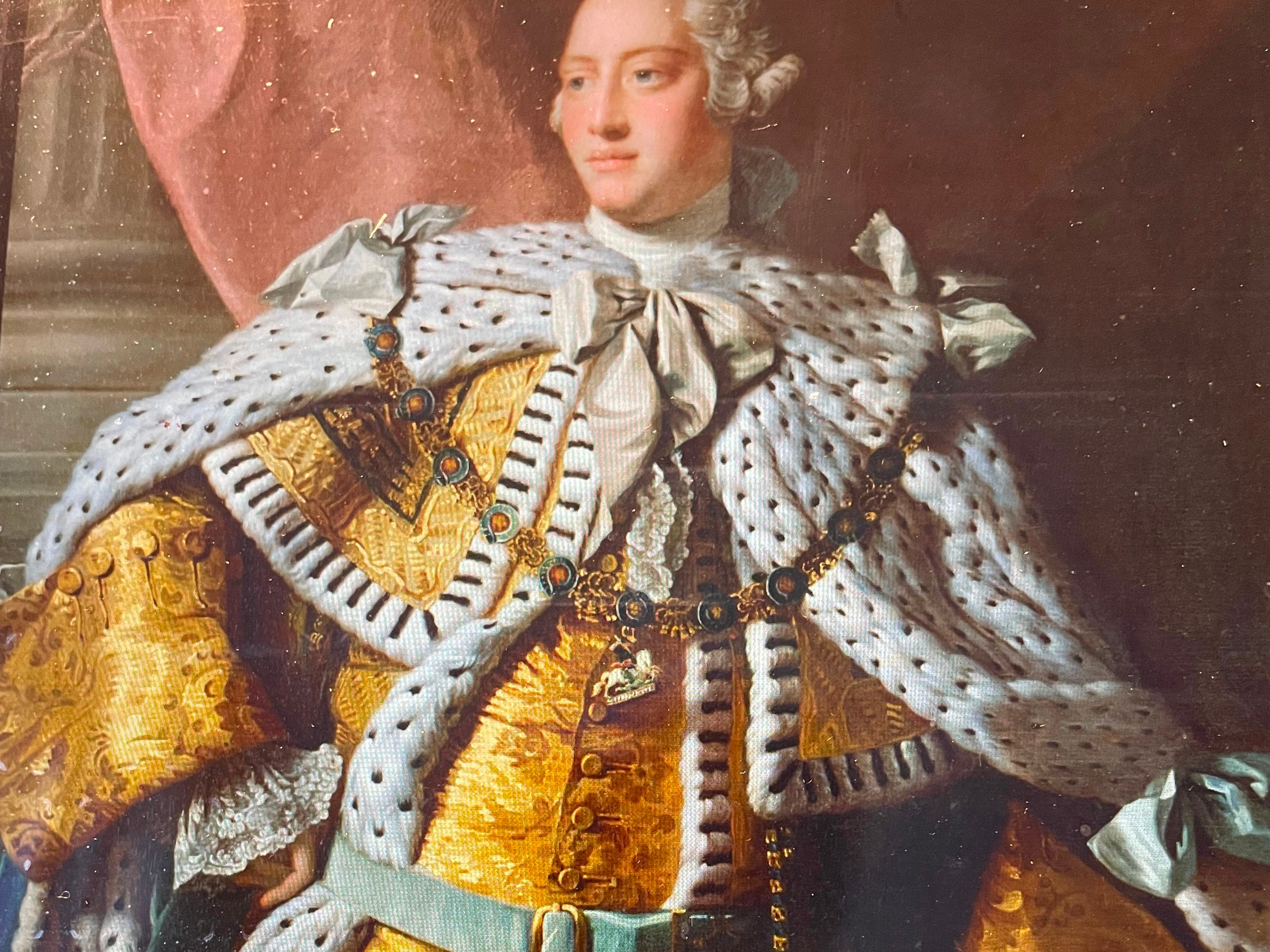
King George III, 14 years before the American Declaration of Independence. Portrait from the studio of Allan Ramsay, held in the National Portrait Gallery, London.
Let’s not begrudge the joy that so many of us felt on No Kings Day, with millions of people showing up at thousands of events in 50 states to protest what Donald Trump is doing to America. For a moment, hold off on declaring that the waving signs — hard-edged, satirical, thought-provoking, silly — really don’t matter, and that there’s not so much meaning in the honking horns of supporters, the ringing declarations of defiance by so many speakers, and the elation of shared purpose that arose on a sunny Sunday across America.
Yes, more misery remains ahead in Trump’s America and in the other parts of the world touched by his malevolence. Certainly, as we read in an instant analysis published even as demonstrators were driving home, it will take work to turn the energy of protests into electoral success. (Simple work, pal; nobody has to remind us of that, not just yet.)
For now, though, give us a moment to celebrate the growing evidence that the political grip Donald Trump has held for so long is slipping. The editor of The American Conservative is calling on Vice President JD Vance to move toward removing Trump from office under the 25th Amendment, by finding him “unfit to serve.” Congressional Republicans aren’t marching in lockstep with a president who pays no attention to the promises that got both him and them elected. Even the latest Fox News poll finds that just over one-third of American voters in this election year are satisfied with how things are going in the country.1
Yes, Trump remains potent and his backers numerous. On a route back from Saturday’s demonstration, a weathered “Trump 2024” banner was flapping in a stiff breeze — an apparent trace of the reality-resistant one-third found by Fox pollsters. Here Upstate, that crowd has always been thick.
In fact, 250 years ago, when pushback against an actual king was the hot topic of the day in America, Upstate remained a redoubt of royalists. But the hardy folks hereabouts weren’t alone.
Nobody was polling back then, but historians estimate that on July 4, 1776, only about 40 percent of European-descended Americans supported the Declaration of Independence. About the same number were fence-sitters — the so-called “neutralists,” who just wanted to be left alone, or who avoided choosing sides to protect their property. That left about one-fifth of the colonials — and a much higher percentage than that in New York and New Jersey — as loyalists to King George III.2
It would be wrong to think of the Tories, as they were called, as a colonial version of the MAGA faithful, because they weren’t oblivious to reality. For people who considered themselves dutiful citizens of England on a foreign shore, independence seemed like a bad idea. As King George III saw it, the entire British constitutional system might be undermined, and the nation weakened, if the American colonies could decide for themselves whether or not to pay taxes to the crown. And Britain had spent a fortune and spilled blood defending its colonies during the recent French and Indian War; the King and a majority in Parliament figured that payment for that protection was due from the war’s immediate beneficiaries.3
The popular notion that George III was an addled autocrat, the sort depicted three decades back in the movie The Madness of King George, is a misreading of history. It wasn’t until long after the American Revolution that George III began to display signs of mental illness. In fact, at the time that the Declaration of Independence famously listed 27 grievances against the King and Parliament – saying that they had “plundered our seas, ravaged our coasts, burnt our towns, and destroyed the lives of our people,” among other offenses – George III was an engaged leader with consistent political beliefs. His fundamental role, the king felt, was to protect the laws of his nation, as laid out by its legislature and ministers.
Consider, on this No Kings Day weekend, that notion: consistency of purpose and respect for the law. Tragically for America, those are not traits of our tyrant of the moment, who nevertheless retains about double the support that George III had when the elected representatives of his subjects decided that they’d had enough.
The demonstrators in more than 3,300 cities and towns all over the country this weekend marched under the right banner: “No Kings” is an appropriate battle cry as we honor the sesquicentennial of our nation’s independence. Donald Trump is a far more irrational and immoral leader than George III was 250 years ago.
It was a brilliant stroke, really, to brand the big demonstrations in this second Trump term as “No Kings” days. It’s a reminder of how deeply ingrained in the American psyche a pushback against tyrannical leadership is, in a year when we are celebrating our forebearers’ fight against a king.
Indeed, in just a bit over three months, on July 8, there will be events to commemorate the 250th anniversary of the first public reading of the Declaration of Independence. At 6 p.m. Eastern on that day, there will be public readings across the country of the document that laid out an emerging nation’s grievances against its ruler.
A modern-day Bill of Particulars against today’s tyrant might lack the eloquence of Thomas Jefferson’s prose, but the reality of what is happening to the American people at the hands of a leader more careless than George III cannot be dismissed. Imagine it:
He has launched a war without the congressional authorization required by the Constitution, putting American treasure and its troops at risk, and threatened military action against the nation’s allies based on specious expansionist visions.
He has defied rulings of courts, encouraging disrespect for judges personally and for the nation’s foundational legal system, and has used his extraordinary pardon power to override the considered judgments of juries and judges, to free criminals.
He has terrorized communities by dispatching masked agents to brutalize immigrants and brown-skinned citizens alike, to conduct raids without warrants, to detain whole families and to kill American citizens.
He has sent military troops into our cities, taking over law enforcement in a violation of the law and a gross display of federal overreach into domestic affairs.
He has attacked democratic norms, claiming without evidence that elections have been corrupted and pushing for new laws that are likely to disenfranchise millions of voters.
He is using agencies of the federal government and filing frivolous lawsuits to try to silence independent media, academic institutions, law firms and businesses, in a trampling of civil liberties guaranteed by the Constitution.
He has worsened economic inequality while rewarding the rich, and enriched his family and friends with business dealings linked to his own name and actions.
He is damaging the economic and social prospects of future generations by inhibiting scientific research, turning aside modern medicine’s best information and reversing efforts to curtail dangerous climate change.
He is building enmity for America and its citizens around the world by ending life-saving aid in the poorest corners of the planet and attacking the legitimate aspirations of people for freedom, while advancing policies that encourage autocrats.
Consider all of that, then, as you weigh what might follow the No Kings demonstrations. A leader less rational and less committed to the rule of law than George III in 1776 leads us these 250 years later. With his offenses visible to all, what do you imagine might happen in seven months, when members of a Congress controlled by his lackeys will face voters? Here’s my judgment: Change is all but inevitable.
A protest demonstration is good for lifting our spirits and building loyalty in a political base. It doesn’t typically change anybody’s mind right away, as those people behind the Trump banners that still flap in the breeze in front of Upstate homes would tell us.
But there are metrics of a movement’s potential for success that merit our attention — because, as a Tanzanian proverb teaches, “Little by little, a little becomes a lot.”
Organizers of the No Kings rallies cite the research of Harvard political scientist Erica Chenoweth, who has studied the success rate of nonviolent protest in recent history. In assessing civil resistance and social movements from 1900 to 2006, Chenoweth found that nonviolent campaigns were twice as likely to lead to political change as violent movements — and, crucially, that once about 3.5 percent of the whole population had begun to participate actively in the resistance, success appeared inevitable.4
“Numbers really matter for building power in ways that can really pose a serious challenge or threat to entrenched authorities or occupations,” Chenoweth wrote. In America today, that 3.5 percent threshold would be about 12 million people.
We don’t yet know if the No Kings rallies this week hit that number. Organizers said the first two rallies, last year, drew 5 million and 7 million people, respectively, and they had predicted at least 9 million attendees this weekend. A movement is building.
As the instant analysts of the rallies noted, of course, one day of protests doesn’t mean people who waved signs will continue to show up, will remain committed to the movement for change, will actually make a difference. Success is not inevitable, notwithstanding whatever history may suggest.
But here Upstate, a place that stubbornly held onto the rule of the last misdirected tyrant to claim dominion over America, the road ahead seems clearer today than it was before. The offenses of George III finally were his undoing on this ground; so will be those of Donald Trump. Take heart, and now take action: We can do this.
https://www.yahoo.com/news/articles/co-founder-american-conservative-group-205527363.html
https://www.americanacorner.com/blog/patriots-vs-loyalists#:~:text=In%20recent%20years%2C%20there%20have,alone%20to%20live%20in%20peace.
https://www.battlefields.org/learn/articles/petitioning-king-and-parliament#:~:text=King%20George%20III’s%20response%2C%20alluded,and%20independence%20from%20Great%20Britain.
https://www.hks.harvard.edu/centers/carr/publications/35-rule-how-small-minority-can-change-world
Comments on this Substack account are limited to paying subscribers. We invite you to join the community.
WHY NOT TELL YOUR TRUTH?
LEARN TO WRITE OP-EDS — FOR PRINT, AUDIO AND PODCASTS
If you’d like some training in writing opinion essays — for newspapers, audio or digital platforms — check out the live 90-minute class Rex co-teaches that is offered by Marion Roach Smith’s global platform for writing instruction, The Memoir Project. Click below for information on our upcoming schedule of classes.
Our next class is Wednesday, April 8, at 7 p.m. Eastern.
Lots of our students have been well published — and you can be, too!
BONUS CONTENT
GET MORE FROM THE UPSTATE AMERICAN
IF YOU’D LIKE TO HEAR MORE from Rex Smith — specifically, his take on current issues in American journalism — you can download the podcast of The Media Project, the 30-minute nationally-syndicated discussion that Rex leads each week with other veteran editors. In the seven states where Northeast Public Radio is heard, the program airs at 3 p.m. Eastern each Friday and is rebroadcast at 6 p.m. Sunday. You can tune in live, too, at www.wamc.org. It has been called “a half-hour of talk about finding and telling the truth.”
ENDNOTE
THANK YOU FOR JOINING US THIS WEEK
THE UPSTATE AMERICAN is a weekly essay aimed at helping all of us who are concerned about America’s future consider how we might best respond to the challenges of the day. Thank you for joining in the conversation about our common ground, this great country. I hope you’ll be back next week.
And don’t hesitate to send your thoughts, especially with ideas that you think we all ought to be considering.
-REX SMITH