
The storm bears down on our democracy
Lessons learned in a blizzard are instructive in the time of Trump

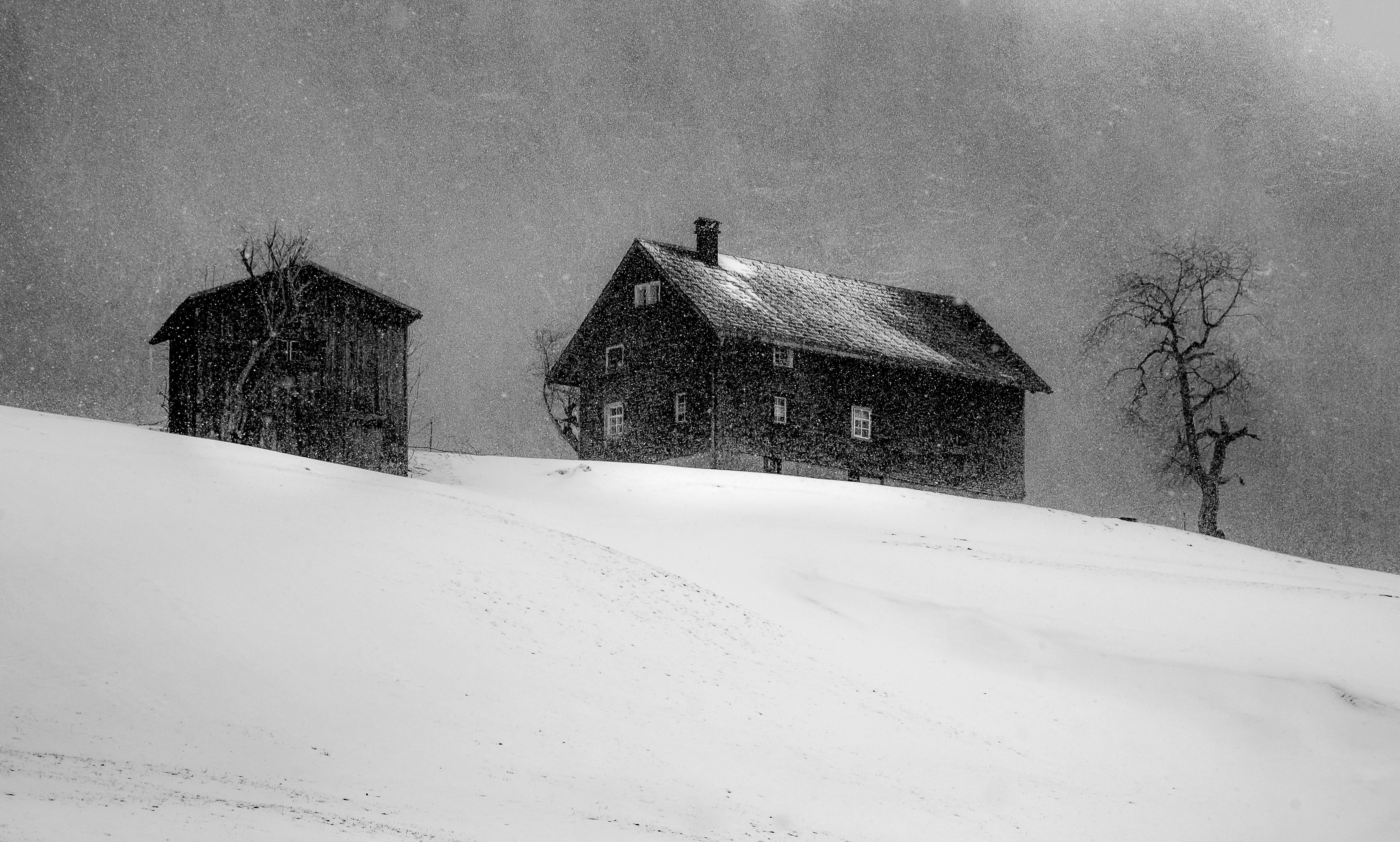
It’s important to be prepared before the storm arrives, and then to respond effectively. (Photo by Christiane Nuetzel on Unsplash)
The firewood is stacked, there’s food in the fridge, and the generator powered up quickly during its latest weekly test. Forecasters say a foot of snow is coming, or maybe two, followed by windchills of perhaps 20 below. We’re ready. You don’t spend most of your life in places that people associate with harsh winters without knowing how to handle whatever nature might head your way.
This is learned by experience. My first big blizzard, as a 9-year-old in a family new to western South Dakota, caused a power outage that knocked out our furnace. My dad was stranded at an out-of-state meeting and we hadn’t laid in much wood for the fireplace. With snowdrifts blocking all the doors of our home, my mom pushed me out a second-floor bedroom window into a drift, then tossed down a snow shovel so I could carve us an exit route. As we awaited snowplows, the cavalry of winter resistance, we huddled around a fire fueled by a little chair from my childhood, chopped up for fuel.
While I’m prepared for what we think is bearing down on Upstate America, it’s not always possible to face a winter storm with equanimity. I have trudged two miles at dusk from a car stuck deep in a Black Hills snowdrift, slid perilously off a highway in the Texas panhandle, and spent a night straddling three plastic chairs at an airport gate. For people who don’t have warm shelter, who are stuck away from home, or who need medical care, the season can be deadly.
But for some of us, winter also teaches some simple and necessary truths: Slowing down, or even stopping for a bit, doesn’t always mark failure; it can be a powerful act of preparation. And if we admire a snowflake, that tiny hexagonal dendrite of ice, we need to recall that its beauty is invisible to anyone untouched by the cold.
Maybe, in fact, the big snowstorm affecting half the country just now will give us a break from the relentless ugliness of the news. We seem to awaken each day to a new example of a great nation’s moral core being shaken by its mentally unstable leader and his careless acolytes. We are shocked by the eager cruelty our country is meting out to those who don’t conform to the rich man’s vision, and by the ignorant abandonment of humane principles long shared with our allies in the interest of peace. Perhaps, then, we will find comfort in enforced quietude —in a novel by the fireplace, say, or in the rich mix of scents wafting from a soup on the stovetop. We’d welcome anything, really, that might rescue our focus from Donald Trump.
Yet we know that this is no time to turn away from reality. In fact, our approach to the coming storm mirrors what we need to keep in mind at this crucial moment as we take a stand against the rising tyranny — yes, that word describes exactly what is happening to America — that is threatening to cement itself in place in this election year. The snowstorm offers lessons of the fight we must wage against Trumpism. And the moment is now: Just as snowplows must roll before the storm is at its peak in order to keep roads passable, the time to intervene in a political crisis is before the system fully breaks.
To avert disasters, then, both political and meteorological, we need to prepare for hard times and quickly respond to challenges. And then we must embrace sustained vigilance.
Both intentional and inadvertent decay have attacked our political infrastructure. More than a half-century ago, one party chose racism and anti-government rhetoric to excite its diminishing base, and the other more recently settled for appeals to divisive identity politics that side-stepped the legitimate concerns of a range of citizens across vast stretches of the nation. We didn’t do enough to prop up essential services that were failing — notably caused by disinvesting from higher education and allowing healthcare to be driven by private profit over public good.
And when the digital revolution hobbled the mass media that had sustained the shared narrative of our time, we viewed it as a business issue to be exploited rather than a social crisis to be confronted. We didn’t have to give Amazon, Meta and Google free rein to seize the online marketplace and trample smaller competitors, nor was it inevitable that Fox News and half-witted online influencers would replace local newsrooms as the source of citizens’ understanding of what’s going on beyond their own back yards.
In the face of this, we can draw some lessons from the natural world. Those of us who live in four-season climes, for example, know that we don’t approach winter storms with such carelessness. Rather, we build a resilient infrastructure to deal with whatever we may confront: Roads ripped up by ice get repaired in summertime, tree limbs are trimmed away from power lines, snowplows are readied as the seasons change and furnaces are checked to make sure they won’t fail when temperatures plunge.
Democracy needs similar year-round maintenance. Schoolchildren need to be taught the realities of history and the principles that have sustained the nation. Political organizations must elevate candidates who share citizens’ commitment to our important institutions — including independent courts, non-partisan civil services and voting rights. No more than storms are battled only when they arrive can democracy be sustained by attention only in campaign season. Failing to act when the weather is calm — that is, when the political climate seems stable — makes an eventual crisis more likely.
To really prepare for a winter storm, of course, requires what may be called proactive risk assessment: You need a reliable forecast. The drop in democracy’s barometric pressure was charted and its danger predicted years ago by many experts, including in Robert Putnam’s landmark 1995 essay Bowling Alone: America’s Declining Social Capital (which he turned into a best-selling book published in 2000). Putnam cited the growing distrust of citizens in their government, which he said was caused in part by “the long litany of political tragedies and scandals since the 1960s.” But he suggested there was a larger problem in “trends in civic engagement of a wider sort” — the civic and fraternal organizations that were declining, the local fire departments that were desperate for volunteers, the religious groups that could no longer provide the care that their faith traditions taught were imperative. Notably, however, Putnam did not offer a prescription for reversing the crisis in civic engagement.
Over the years since, it has become clear that too many people in a position to help sustain American democracy have abandoned their posts. And just as ignoring an impending winter storm can enhance its danger, the failure of political leaders to respond to the warning signs of America’s democratic decline have made our current civic storm a national emergency — indeed, an impending global cataclysm.
To emerge from the gusts and gales rocking American democracy, then, we need a commitment to be the forces of storm repair. I’d suggest five objectives to meet the gale-force challenge of Donald Trump’s tyrannical storm.
First, we need to reinvigorate local engagement, by supporting both local government — including school boards and city councils — and local organizations that strengthen the fabric of their hometowns. Alongside that, we must sustain both social aid organizations and the arts groups that enrich our communities.
Second, we need to organize and mobilize. We are inspired by the brave citizens of Minnesota, who are with certainty and dignity making it clear that Trump’s oppressive regime has lost the consent of the governed, and that they will not let its inhumanity speak for all of us. We must all be prepared for similar assaults in our own towns and cities, and we must respond with the thoughtfulness that characterizes Minnesotans.
Third, we must be a part of direct political action — campaigning, donating, even running for office — in order to push back against those who have less regard for our democratic norms than they do for the accumulation of power in support of the Cult of Trump.
Fourth, we should support truth-telling by backing up reliable local reporting and refusing to engage with unreliable players in the information ecosystem. Tyranny thrives in “news deserts” — places where fact-based journalism has disappeared, or greatly diminished — and we are awash in manufactured reality. As Trump unapologetically and repeatedly lies about matters of extraordinary importance, his staff routinely alters images and creates fake memes (at taxpayer expense) that further divide society. Please subscribe to honest journalism outlets, and support the growing community of nonprofit journalism.
Finally, we need to sustain our own capacity to engage. Like stocking up before a storm, we need to give ourselves the grace of preparation for an onslaught. With awareness of our own capacity, we must always keep our goal in sight. Storms pass, leaving us to deal with their effects — sometimes tragic, often messy, but ultimately yielding to another day.
Which means that we retain hope. That is, even in the midst of a stubborn storm, it’s well to recall the romantic poet Percy Bysshe Shelley’s assurance: “If Winter comes, can Spring be far behind?” In withstanding the winter, fierce and frightening as its onslaught may be, we can be ready for a sweet springtime in America.
IS IT YOUR TIME TO UNDERTAKE A WRITING INITIATIVE?
LEARN TO WRITE OP-EDS — FOR PRINT, AUDIO AND PODCASTS
If you’d like some training in writing opinion essays — for newspapers, audio or digital platforms — check out the live 90-minute class Rex co-teaches that is offered by Marion Roach Smith’s global platform for writing instruction, The Memoir Project. Click below for information on our upcoming schedule of classes.
Our next class is WEDNESDAY, FEB. 18 at 5:30 p.m. Eastern.
Why not join us?
Lots of our students have been well published — and you can be, too!
BONUS CONTENT
GET MORE FROM THE UPSTATE AMERICAN
IF YOU’D LIKE TO HEAR MORE from Rex Smith, check www.wamc.org for his weekly on-air commentary aired by Northeast Public Radio. Here’s a link to the latest essay, which is an earlier version of this week’s column, adapated for audio.
AND IF YOUR INTEREST IS SPECIFIC TO AMERICAN MEDIA, you can download the podcast of The Media Project, the 30-minute nationally-syndicated discussion that Rex leads each week on current issues in journalism. In the seven states where Northeast Public Radio is heard, the program airs at 3 p.m. each Friday and is rebroadcast at 6 p.m. Sunday. You can tune in live, too, at www.wamc.org, or download the podcast there. It has been called “a half-hour of talk about finding and telling the truth.”
WITH GRATITUDE
THE UPSTATE AMERICAN is a weekly essay aimed at helping all of us who are concerned about America’s future consider how we might best respond to the challenges of the day. Thank you for joining in the conversation about our common ground, this great country. I hope you’ll be back next week. And don’t hesitate to send your thoughts, especially with ideas that you think we all ought to be considering.
-REX SMITH
I think that far too many citizens are blithely going about their lives, cocooned from the danger and long range aftermath.
"In preparing for battle I have always found that plans are useless, but planning is indispensable." - Dwight Eisenhower