
Rural America needs better leaders
Trump's multi-billion-dollar farm bailout is a stopgap forced by his own failed policies. Farmers and ranchers deserve a respectable alternative.

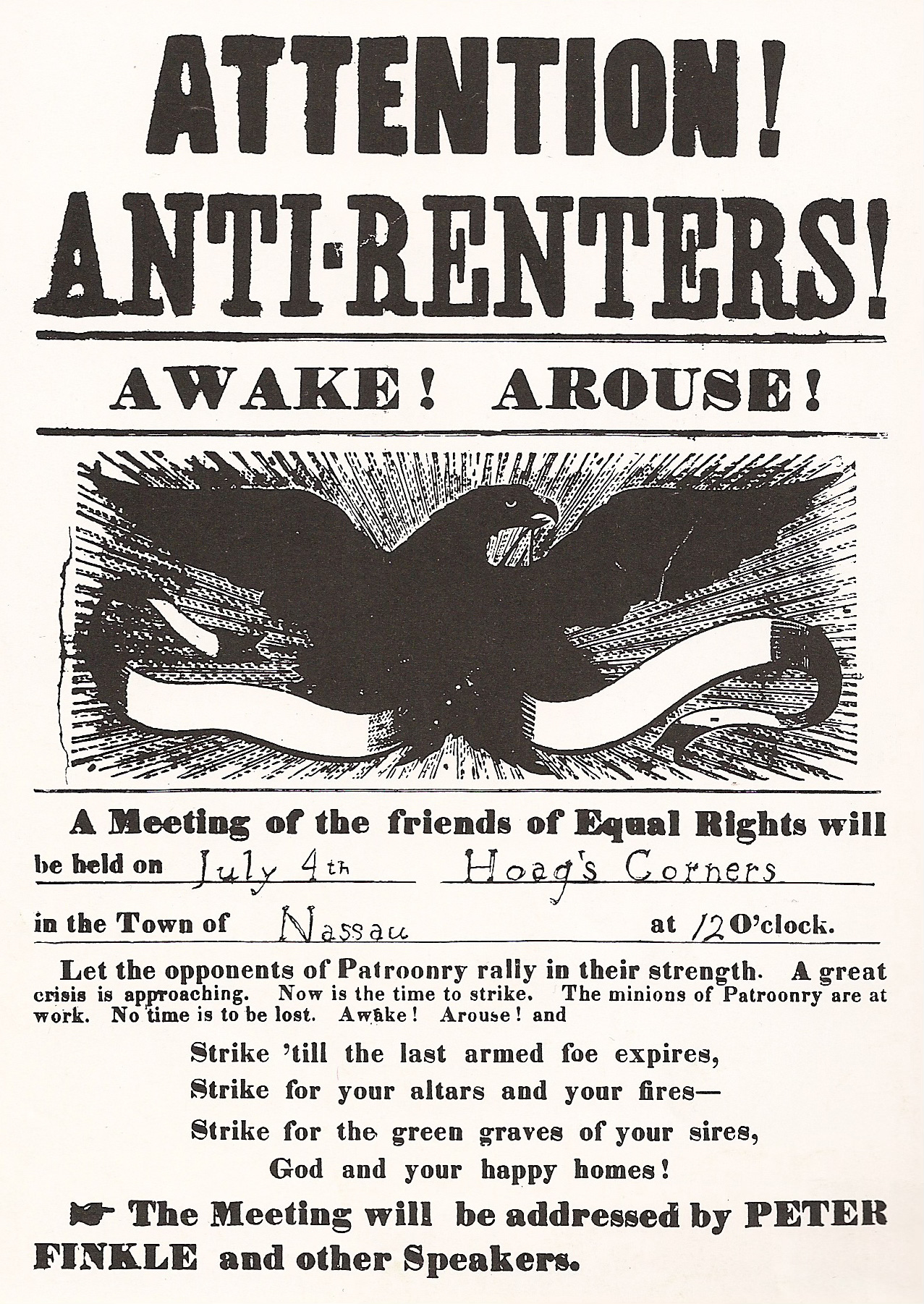
If you think farmers can’t rise up against their political overseers, consider our history.
The resilient sodbuster is an American icon: that stubbornly independent farmer whose pioneering spirit and hard labor forged the nation’s economic might and — perhaps only in our imagination — sustains it still. Farmers don’t seem to have much economic clout anymore. The output of U.S. farms first fell behind that of factories in the 1890s, and in today’s economy, which is driven by industry and services, farms produce less than 1 percent of the gross domestic product.1
Maybe, then, Donald Trump’s cavalier disregard of the farm sector is based on the simple political calculation that it won’t cost him too much. Farmers and their kin and neighbors overwhelming voted for him last year — of the 444 counties that the government defines as “farming dependent,” he lost only 11 — but we long ago learned that Trump’s sense of loyalty is only one-way. And do you really think the farmers and the people around them will abandon the Republican party, even if it destroys their export markets, drives up their production costs, empties their labor pool and makes their health care unaffordable?2
Well, maybe. History suggests that even the most ardent fans of a politician won’t long tolerate careless abuse, which is a pretty good description of how Donald Trump is treating the Farm Belt. Seemingly overwhelming political advantage can shift swiftly in America.
In fact, if I were a Democratic political consultant, I’d be prospecting for clients in the Midwest right now, reminding potential candidates that over just a few election cycles in my lifetime, the South switched from dependably Democratic to solidly Republican.
When I headed off to college in Texas, the state was dominated by Democrats, and a member of Congress from Houston, George H.W. Bush, was in the process of losing a U.S. Senate race. Democrats held governorships throughout the South (including the just-elected Jimmy Carter in Georgia), along with most of the region’s U.S. Senate seats. But a shift was well underway, provoked by the parties swapping stances on civil rights: Democrats, who had for nearly a century advocated Jim Crow laws and kindled nostalgia for the Confederacy, became in the 1960s the champions of civil rights; that freed the party of Lincoln to cynically capitalize on obstinate racism, which aides to Richard Nixon touted it as their “Southern Strategy.” It worked; it’s essentially why political maps of the country today are so red.
You can’t consider that history and assume that the political alignment of our time is locked into place. In fact, the American Farm Belt may be fertile for just that sort of a dynamic, as the Republican Party of Donald Trump embraces ideas that ought to be as offensive to Midwestern farmers as anti-racism was the southerners 60 years ago. Maybe it’s not fanciful to consider whether Trump’s tariffs and other missteps could trigger a political realignment in this decade like what the Civil Rights Act and the Voting Rights Act did in the mid-1960s.
After all, hard-working and independent-minded farmers and ranchers — and their neighbors — aren’t the sort who easily swallow the need to accept federal subsidies to prop up their families’ incomes. Nor are they happy about losing hard-won foreign markets for American farm products, and then sending American aid to a country that steps in to replace those U.S. products with its own. Recognizing that more than 4 in 10 farm workers are undocumented, they have to look cooly at immigration policies that are making it impossible to find help to harvest the crops.
And then there are the pressures that every working family is feeling just now, whether they live in cities, suburbs or the countryside: prices too high in the supermarket, health insurance rates skyrocketing, good jobs hard to find for a rising generation, housing costs increasingly turning home ownership into an elusive dream. Meanwhile, as American stability crumbles, the president is choosing the hue of Italian marble for his ornate White House ballroom and planning a massive archway celebrating himself across the Potomac River from the Lincoln Memorial.
Voters will put up with a lot to stay loyal to their political allegiance. But Trump’s haphazard policies has yielded a Republican Party with careless politics. And so much of it contradicts the values of good people, like the uncles and cousins in my family who have long farmed in the Midwest, and the old friends who ranch in the West. This is neither the America they knew as children nor what Trump promised them. Maybe, then, this is a ripe moment for a new strategy to win the hearts and votes of rural America, one that is truly pro-agriculture.
Actually, just counting farm products understates the impact of American agriculture, because there are so many related industries: food and beverage manufacturing; eating and drinking places; textiles, apparel and leather products; forestry and fishing. When you count all of that, economists suggest that agriculture and its related industries provide 10 percent of U.S. jobs.
That’s not insignificant. For point of comparison, consider that only about 7.25 percent of Americans work in the technology sector, which is now the focus of so much federal policy, with the encouragement of its billionaire leaders who are happy to curry the favor of a flattery-obsessed president.3
Notably, 92 percent of all U.S. jobs now require digital skills, but one-third of workers don’t have those skills — a share that is higher, in fact, in rural areas.4 Yet we are reminded daily of how dependent we are on technology, of how tech stocks are performing, of new tech plants opening in our states. Trump is so eager to let tech companies amass the cash they need to do whatever they want that he is gutting the government’s capacity to regulate business, including protections long in place to provide cleaner air and water and to protect workers’ safety and financial security.
If only he demonstrated similar eagerness to support American agriculture. Instead, in one policy area after another, he has turned his back on some of his most loyal backers.
Consider the about-face forced upon Republicans by Trump’s infatuation with tariffs. Conservatives have for generations supported free trade, but they have had to sing a different tune as Trump has fashioned tariffs into the bludgeon of his foreign policy. While the whole world has paid a penalty — in higher prices, disrupted markets, lost jobs and lower GDP in almost every nation — the U.S. agriculture sector has been especially hard-hit.
Soybeans, the nation’s largest export crop, is the leading indicator of the disaster. China has for years been the leading market for U.S. soybeans, but it immediately cut off those purchases this year when Trump imposed huge tariffs on Chinese imports. It hasn’t proven to be a problem for China; it quickly negotiated contracts with Brazil and Argentina to replace those American beans. As those contracts took hold, U.S. soybean prices plunged. Trump inexplicably chose that moment to prop up Argentina’s government by buying $20 billion worth of pesos.5
So much for “America First,” you might think. The contrast of billions for Argentina and squat for American farmers left even the most steadfast Trump Farm Belt supporters uneasy, or downright angry.
Even someone as oblivious to the pain of ordinary folks as Donald Trump had to respond. So last month he trumpeted a new trade deal with China, pretending it was a breakthrough rather than a forced retreat. Yet even with that in place, China’s purchases of American soybeans over the coming years will be 14 percent lower than the five-year average since 2020, according to a Purdue University analysis. Meanwhile, tariffs on farming-related machinery as well as products like seeds and fertilizer sit at 9%, raising the prices that U.S. farmers will face this year by about $33 billion, according to North Dakota State University’s Agricultural Trade Monitor. So while soybean future prices have risen, they’re still below the break-even point for most American farmers.
The depressed prices and continuing affordability crisis have put such a squeeze on farmers that Trump last week announced a $12 billion farm aid program. Some assistance checks will be mailed out at the end of February, officials say. “Now we’re once again in a position where a president is able to put farmers first,” Trump declared. “But unfortunately, I’m the only president that does that.”
Not really; in fact, not at all. Presidents of both parties have long provided aid to farmers; what they haven’t done is whipsaw them with policies that destroy their markets and then brag about stepping into save them from ruin. Experts warned that Trump’s tariffs would hurt farmers and require direct aid; it’s exactly what happened during his first term. Trump’s rural policies are forcing farmers to become aid-dependent as surely as urban disinvestment generations ago left city dwellers little alternative to welfare.
There’s never enough money in such aid programs to make up for what can be generated by a healthy economy and all the social stability it supports. Another tranche of funds for farms will be needed to offset the impact of Trump’s failed policies, but what comes after that? “At the end of the day, the farmers, they just want to conduct business, not necessarily have to get these packages to help them out during these times,” Ryan Loy, a University of Arkansas economist told Fortune.6
You have to wonder if it might embarrass some of the MAGA faithful who will become, quite involuntarily, welfare dependents. Maybe they will even look for a more hospitable political home.
For generations after the War of Independence, a feudal system continued to dominate the corner of America where I now live. It was a relic of the 1600s, when a million-acre tract that came to be known as the Manor of Rensselaerwyck had been conveyed by the Dutch crown to a businessman, Kiliaen Van Rensselaer. Well into the 19th century, the Van Rensselaer descendants — generations of patroons, as the Lords of the Manor were known — continued to extract payments from those who farmed the land. The farmers rarely earned enough to both support their families and fully pay the patroon, which led to a crisis after the Panic of 1837 left the Van Rensselaers cash short and demanding that farmers pay all they owed or face eviction.
It seemingly occurred to the neglected farmers that they had clout in both their own number and in the ideals that underlaid the American democracy. A mass meeting in the hills above Albany in 1839 yielded a statement: “We will take up the ball of the Revolution where our fathers stopped it and roll it to the final consummation of freedom and independence of the masses.” The farmers began to resist rent collection, property tax collection and eviction, sometimes leading to violent conflict with authorities. It became known as the Anti-Rent War.
My first humble house in Upstate New York was in a hamlet called Hoags Corners, the site of some key organizing and activism during the Anti-Rent War. The locals celebrated it each Independence Day with a rather haphazard re-enactment, one year featuring the incumbent county sheriff riding my horse down the main road as our costumed friends chanted the 19th-century war cry, “Down with the rent!”
The insurrection eventually gained enough political clout to help elect a New York governor and legislature in 1846 who took the side of the farmers. A new state constitution embraced land reform, outlawing long-term leases and establishing tenant farmer rights. It abolished the last vestiges of feudalism in America.7
Some would say, though, that those who make their living off the land aren’t truly free of wealthy oppressors even today. A key reason that farm production costs are so high, many economists argue, is because of corporate consolidation that has led to near-monopoly domination key inputs: Three companies control 93 percent of nitrogen fertilizer sales in America, and four companies control 60 percent of the global seed market.
So making farmers dependent on federal aid, like the latest $12 billion Trump bailout, is a stopgap on a fundamentally flawed system: Government support encourages over-production of grain crops by massive corporate farms. If even a fraction of those dollars were re-allocated to encourage small farms and regenerative agricultural practices, we might produce more of our own food here at home. Right now, imports supply about 60 percent of the fresh fruit and 40 percent of the fresh vegetables for American consumers.8
That sort of reallocation of federal support would enable more Americans to make at least part of their living off the land, and immeasurably strengthen rural communities. Isn’t that, after all, a more wholesome approach to rural development than building massive data centers on former farmland and offering drug treatment to under-employed rural youth — and, of course, buying off farmers’ political allegiance with cash payments after you’ve blown a hole in their markets?
In fact, it sounds to me like the seeds of a rural political strategy, one that respects the heritage of America’s farmers and ranchers and offers a future that isn’t subject to the whims of a volatile, unserious president. And it would help restore the political power of rural America — which has for far too long been neglected by its supposed patrons.
https://www.ers.usda.gov/data-products/chart-gallery/chart-detail?chartId=58270
https://investigatemidwest.org/2024/11/13/trump-election-farming-counties-trade-war/
https://www.coursereport.com/reports/techxodus
https://nationalskillscoalition.org/news/press-releases/new-report-92-of-jobs-require-digital-skills-one-third-of-workers-have-low-or-no-digital-skills-due-to-historic-underinvestment-structural-inequities/#:~:text=WASHINGTON%2C%20DC%20%E2%80%93%20February%206%2C,a%20significant%20digital%20skill%20divide.
https://farmdocdaily.illinois.edu/2025/11/us-china-soybean-deal-comparing-past-export-levels-and-global-market-impacts.html
https://fortune.com/2025/12/09/trump-12-billion-farmer-bailout-bandaid-tariff-input-costs-soybeans/
Since moving to the area of the Anti-Rent Wars in the late-1980s, I’ve become familiar with the contours of the event from many sources. For an overview, I recommend a piece written in the mid-1970s by my late friend Joe Persico: https://www.americanheritage.com/feudal-lords-yankee-soil#3
For a more thorough and thoughtful sense of what American agriculture can be, check out the Real Organic Project. Disclosure: the project’s co-leader is my niece.
https://realorganicproject.org/?gad_source=1&gad_campaignid=21946171192&gbraid=0AAAAABxB4xBx95VPJMHcZKibGZRL6Y2Ci&gclid=Cj0KCQiAuvTJBhCwARIsAL6DemjRdhOQl5-gT-EvZAhhpeST8p0KkW9k0XwDsdPhxNjCicvOZwSLcpUaAsxxEALw_wcB
START THE NEW YEAR WITH A WRITING INITIATIVE
LEARN TO WRITE OP-EDS — FOR PRINT, AUDIO AND PODCASTS
If you’d like some training in writing opinion essays — for newspapers, audio or digital platforms — check out the live 90-minute class Rex co-teaches that is offered by Marion Roach Smith’s global platform for writing instruction, The Memoir Project. Click below for information on our upcoming schedule of classes.
Our next class is TUESDAY, JAN. 13 at 1 p.m. Eastern.
Why not join us?
Lots of our students have been well published — and you can be, too!
BONUS CONTENT
GET MORE FROM THE UPSTATE AMERICAN
IF YOU’D LIKE TO HEAR MORE from Rex Smith, check www.wamc.org for his weekly on-air commentary aired by Northeast Public Radio. Here’s a link to the latest essay, which is an earlier version of this week’s column, adapated for audio.
AND IF YOUR INTEREST IS SPECIFIC TO AMERICAN MEDIA, you can download the podcast of The Media Project, the 30-minute nationally-syndicated discussion that Rex leads each week on current issues in journalism. In the seven states where Northeast Public Radio is heard, the program airs at 3 p.m. each Friday and is rebroadcast at 6 p.m. Sunday. You can tune in live, too, at www.wamc.org, or download the podcast there. It has been called “a half-hour of talk about finding and telling the truth.”
THANK YOU for reading The Upstate American, and for joining us in the conversation about our common ground, this great country. As we together navigate these challenging times, I hope you’ll join us again next week — or send me a message with ideas you’d like to see us address. I love to hear from readers.
-REX SMITH
I sincerely hope you're right about a possible realignment of rural voters. I'm becoming more optimistic about fractures in the Republican party every day. But Democrats must be willing to realign toward rural folks also.
“The thing worse than rebellion is the thing that causes the rebellion.” - Frederick Douglass