
Subaru could teach Trump about accountability
Why do we expect more of car repair than we do of government leadership?

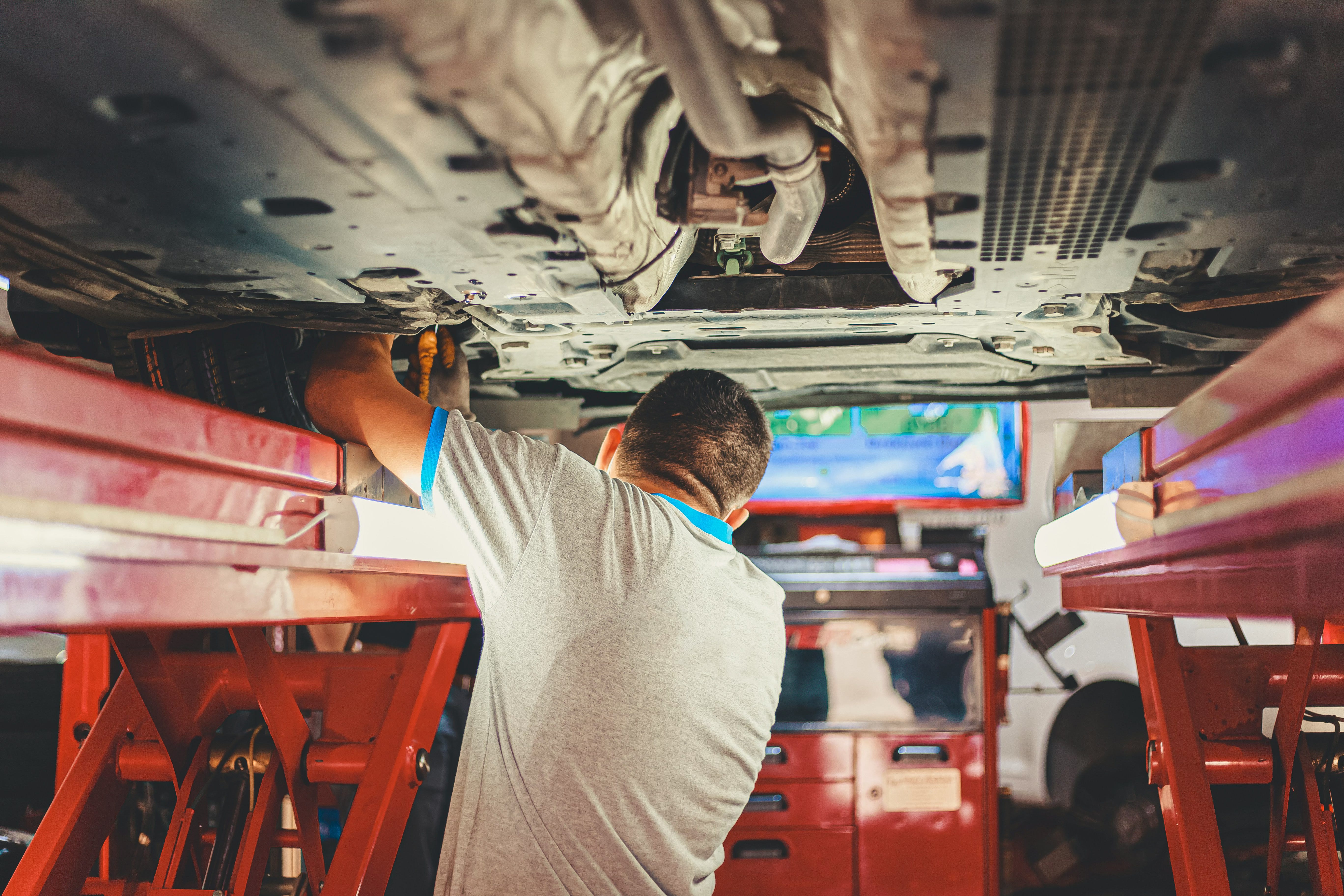
Once you get under the hood, it’s your job to fix things — and be held accountable for the repairs. (Photo by Enis Yavuz on Unsplash)
Some fathers play ball or go fishing with their kids, and mine tried that, but it wasn’t what he most enjoyed. So we found a hobby that lasted from my childhood to my visits home as a young adult and to our last time together: we looked at cars. Wherever we found ourselves, and in whatever season, in both bright showrooms and on outdoor lots beneath strings of lights, we would test the seats, look under the hood and go for test drives, both of us probably dreaming of the trips we’d take in those cars. Pop bought six dozen cars during his 72 years on earth. People seem to think that’s a lot. As you might imagine, all the car dealers in our town considered him a friend. Some he trusted more than others.
It probably wouldn’t work as a hobby for father and son these days, though, because there’s not as much car trading going on. Cars have gotten both more expensive and more durable. In 1970, the average age of an automobile on the road was was 5.6 years; last year, it was about 14.5 years.1 So showrooms aren’t as busy as they were when I was a kid ogling chrome bumpers and ragtops and my dad was making a deal to trade his ’65 Dodge Coronet sedan for a candy-apple red ’66 Mustang convertible. (Sweet!)
In fact, car dealers sell so few cars these days that only about a quarter of their profit comes from new-car sales, the National Automobile Dealers Association reports. Fully half a typical dealership’s net comes from selling parts and servicing cars. And car repair is a quite competitive market, because the longer people keep cars, the less loyal they are to dealerships for repair and routine maintenance. So car dealers’ financial success really depends on delivering great service when your bearings need to be replaced or your battery has gone kaput.2
That was underscored for me this week when I dropped off my Subaru at our nearby dealer. Hey, don’t roll your eyes at me: I understand that in admitting to being a Subaru driver, I’m fitting into a stereotype in the Northeast, where Subaru is the best-selling car in four states. Here in Upstate America, we know those dependable AWD SUVs will go about anywhere and keep you safe if you slide off the road into a ditch. (By the way, you should see the parking lot at the public radio studios where I record my weekly commentaries: The building was originally a Studebaker dealership, but nowadays it looks like they’re pushing Subarus. Probably Subaru should declare itself the mascot of NPR.)3
Anyway, one evening this week I dropped my car at the dealership after hours with a note explaining what was wrong, and I got a call first thing in the morning promising to get the work done right away. Then came a call with a price estimate, soon followed by a video from a mechanic who was beneath my car, showing me what he was doing. He told me his name. Would I text back my OK to continue? I did. And when the repairs were done, I got a checklist and a follow-up. These guys seemed to want me to hold them accountable for what they were doing with my car. My dad would have been impressed.
What strikes me is how much better off this country would be if more of us adopted the ethic of the modern-day automobile service department. When it comes to accountability, there seems to be more demanded of car repair shops than of the politicians we elect to lead the most powerful nation on earth through these tumultuous days. It’s as though we expect less of our government than we do of a Subaru dealer.
The notion that humans are accountable for their actions has been a focus of philosophers for millennia. Aristotle wrote that we become just or unjust through repeated actions, so that our character is shaped by the repetition of those choices. It’s a notion I’ve drawn upon on the several occasions that I’ve been asked to speak at graduation ceremonies, where I’ve tried to suggest to young people that they should worry less about the big decisions they’re facing — what job will I take? where will I live? who will I love? — than the small choices, day by day and moment by moment, that cumulatively will determine the true quality of their lives.
Every major religion makes the point that individuals are accountable for their behavior. Eastern teachings, like Buddhism and Hinduism, recognize karma as a sort of universal law of cause and effect, with humans creating the situations that shape the future, including in lives to come. In the Abrahamic religions — Judaism, Christianity and Islam — believers are taught that theirs is a personal responsibility for ethical conduct, with consequences for moral lapses.
The Christianity of my youth didn’t always make it easy to understand where the expectation of perfect behavior ended and the promise of forgiveness for your failures began. I recall being a bit terrified by a warning attributed to Jesus in the Gospel of Matthew: “I tell you that everyone will have to give account on the day of judgment for every empty word they have spoken.” 4 Really, every word? It’s a notion that could make a kid get serious pretty fast.
That sort of scripture has always appealed to those who see faith as a set of expectations imposed from on high, like the authoritarian teachings that not coincidentally underlie today’s Christian nationalism. But it wasn’t the focus of my faith tradition. Rather, I was taught from an early age to worry less about my action bringing a judgment of eternal hellfire than revealing a failure of contemporaneous care — although, of course, I didn’t have those words at hand as a child. I came to understand that moral humans are expected to do good deeds, to bear responsibility for their actions and to hold each other accountable in love. We were to be motivated less by God’s law, then, than by personal responsibility for our own moral behavior.
A certain courage is implicit in that sense of responsibility for oneself. It has always struck me as a cop-out to see both Old Testament law as the reason to exhibit morality and the New Testament promise of forgiveness as a way to excuse its absence. That’s the stuff of evangelical Christianity, the political movement at the core of Donald Trump’s success. It’s why so many of the superficially pious let him skate free as he behaves reprehensibly.
You don’t get the impression that Trump’s supporters care about his moral fluidity, nor about how unwilling he is to face responsibility for his behavior. And he certainly doesn’t care. He’s not the introspective type, you know. Nor caring, nor empathetic, nor accepting of accountability for what he does or fails to do.
In fact, Donald Trump accepts blame for none of the problems that most trouble Americans. High prices, drug overdose deaths, international instability — all are the fault of “radical-left” Democrats, in his telling, just like it’s because of Democrats that we’re still talking about Jeffrey Epstein more than six years after the convicted pedophile’s death.
And, tragically, the Trump administration just now admits to no responsibility for the tension that threatens even more violence in Minneapolis and elsewhere. We’re told, rather, to blame criminal immigrants and Democratic politicians for the shooting death of Renée Good at the hands of a federal agent on assignment from the White House — oh, and it was the fault of Ms. Good herself, too, since she was engaged in “domestic terrorism.” At this moment, it is hard to see how we will avoid more bloodshed and sorrow without a trace of accountability being assumed by those responsible for the nation’s well-being.
This cannot surprise us, of course, since Trump has always avoided being held to account for his circumstances and behavior. He famously dodged the draft during the Vietnam war by getting a diagnosis of bone spurs from a friendly podiatrist whose office was in a Trump-owned building. On six occasions, his businesses declared bankruptcy to avoid paying its debts; over three decades, Trump has been involved in 4,095 lawsuits aimed at using the legal system to shift blame for a conflict in one way or another. Trump even admits no blame for the Jan. 6 insurrection at the Capitol, which began after he exhorted supporters on the Mall, “If you don’t fight like hell, you’re not going to have a country anymore.” A day of love, he now says.
Yet if the president is America’s most flagrant evader of accountability, the record of Congress isn’t much better. Trump has seized more power for himself than any previous president while the Republican-led Congress has shrugged, over and over again. As Trump disables government — hobbling Social Security offices, trashing environmental laws, letting both prices and the federal debt rise, mocking of the notion of equal justice for all under law — there is no sense that the Republican majority holds itself accountable for the consequences. Potentially influential legislators are watching meekly as he tears up the international order. This week, for example, the Senate (by the single vote of Vice President JD Vance) refused to shoulder its constitutional role to either bar or authorize Trump to take military action in Venezuela. It’s clearly time for an accounting on Greenland, where Trump is itching for a fight, but there’s yet no sign of a backbone in the majority.
So we have seen the erosion of the constitutional role of Congress as a check on executive power. We are feeling the consequences of policy failures and weakened national security due to its inaction. And we are witness to increased corruption and diminished public trust.
So if our leaders won’t be guided by conscience or hold themselves accountable, that becomes our job. And our chance to force change is drawing near.
It’s like the expectation of extraordinary service that now is ours after we buy a car. In a matter far more consequential than car mechanics — namely, the functioning of American democracy in its 250th year — voters have a right to demand accountability from their officials after they’re elected to office. That point will surely be made in public conversations and in massive demonstrations and throughout campaigns in the months ahead.
There will be a bumpy road, surely, between now and then. But judgment day comes on the first Tuesday of November.
https://www.fhwa.dot.gov/ohim/onh00/line3.htm
https://www.claimsjournal.com/news/national/2025/04/21/330147.htm#:~:text=Cars%20on%20the%20road%20are,was%2011.4%20years%20in%202014.
While Subaru claims to be the second best-selling brand in the four New England states, Honda actually sells better in my Upstate New York county. I’ve owned six of those, and only three Subarus. https://www.timesunion.com/state/article/vehicle-in-ny-21171266.php
Matthew 12:36. For context, here’s the New Internal Version of the full chapter.
IS IT YOUR TIME TO UNDERTAKE A WRITING INITIATIVE?
LEARN TO WRITE OP-EDS — FOR PRINT, AUDIO AND PODCASTS
If you’d like some training in writing opinion essays — for newspapers, audio or digital platforms — check out the live 90-minute class Rex co-teaches that is offered by Marion Roach Smith’s global platform for writing instruction, The Memoir Project. Click below for information on our upcoming schedule of classes.
Our next class is WEDNESDAY, FEB. 18 at 5:30 p.m. Eastern.
Why not join us?
Lots of our students have been well published — and you can be, too!
BONUS CONTENT
GET MORE FROM THE UPSTATE AMERICAN
IF YOU’D LIKE TO HEAR MORE from Rex Smith, check www.wamc.org for his weekly on-air commentary aired by Northeast Public Radio. Here’s a link to the latest essay, which is an earlier version of this week’s column, adapated for audio.
AND IF YOUR INTEREST IS SPECIFIC TO AMERICAN MEDIA, you can download the podcast of The Media Project, the 30-minute nationally-syndicated discussion that Rex leads each week on current issues in journalism. In the seven states where Northeast Public Radio is heard, the program airs at 3 p.m. each Friday and is rebroadcast at 6 p.m. Sunday. You can tune in live, too, at www.wamc.org, or download the podcast there. It has been called “a half-hour of talk about finding and telling the truth.”
WHO’S RESPONSIBLE FOR THIS?
When an error in last week’s edition of The Upstate American was brought to my attention, I published a correction, and sent subscribers a note under the caption, “My Mistake.” Reputable journalists hold themselves accountable for accuracy. That’s my commitment to you.
THANK YOU for reading The Upstate American, and for joining in the conversation about our common ground, this great country. I hope you’ll join us again next week — or send a message with ideas you’d like to see us address.
-REX SMITH
I am a car slut myself. There are worse aberrant behaviors, er, hobbies!